Warsztaty technologiczne także dla studentów

Zapraszamy studentów! temat: Oracle – budowa, działanie, cechy szczególne; 8.03 godz. 15:30; miejsce: biuro TouK;

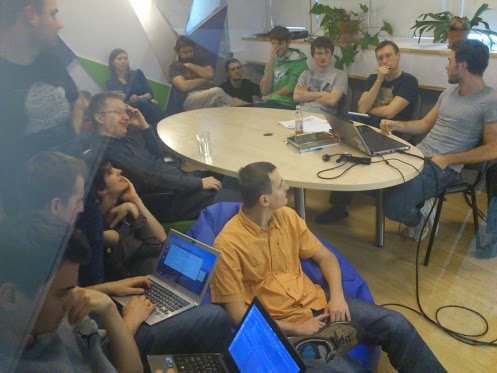
warsztatyPiątki u nas to dzień poświęcony w części na naukę. Bardziej lub mniej regularnie odbywają się spotkania podczas, których developerzy TouK opowiadają o narzędziach, ciekawostkach dotyczących developmentu i nowych technologiach, których się nauczyli.
W tym tygodniu zapraszamy studentów!
Najbliższe spotkanie 8.03 o godzinie 15:30 poprowadzi Marek Pettka, miejsce: biuro TouK al. Bohaterów Września 9; temat: Oracle – budowa, działanie, cechy szczególne.
Ilość miejsc jest ograniczona dlatego zainteresowanych proszę o maila do środy 6.03 (do końca dnia) na adres: mzb@touk.pl. Oczekujcie odpowiedzi z informacją czy jest jeszcze miejsce.
PS. Jeżeli pomysł się sprawdzi będziemy na blogu informować o następnych spotkaniach.

Zapraszam!

You May Also Like

Distributed scans with HBase

HBase is by design a columnar store, that is optimized for random reads. You just ask for a row using rowId as an identifier and you get your data instantaneously. Performing a scan on part or whole table is a completely different thing. First of all, it is sequential. Meaning it is rather slow, because it doesn't use all the RegionServers at the same time. It is implemented that way to realize the contract of Scan command - which has to return results sorted by key. So, how to do this efficiently?HBase is by design a columnar store, that is optimized for random reads. You just ask for a row using rowId as an identifier and you get your data instantaneously. Performing a scan on part or whole table is a completely different thing. First of all, it is sequential. Meaning it is rather slow, because it doesn't use all the RegionServers at the same time. It is implemented that way to realize the contract of Scan command - which has to return results sorted by key. So, how to do this efficiently?

Micro services on the JVM part 1 – Clojure

Micro services could be a buzzword of 2014 for me. Few months ago I was curious to try Dropwizard framework as a separate backend, but didn’t get the whole idea yet. But then I watched a mind-blowing “Micro-Services Architecture” talk by Fred George. Also, the 4.0 release notes of Spring covers microservices as an important rising trend as well. After 10 years of having SOA in mind, but still developing monoliths, it’s a really tempting idea to try to decouple systems into a set of independently developed and deployed RESTful services.

Micro services could be a buzzword of 2014 for me. Few months ago I was curious to try Dropwizard framework as a separate backend, but didn’t get the whole idea yet. But then I watched a mind-blowing “Micro-Services Architecture” talk by Fred George. Also, the 4.0 release notes of Spring covers microservices as an important rising trend as well. After 10 years of having SOA in mind, but still developing monoliths, it’s a really tempting idea to try to decouple systems into a set of independently developed and deployed RESTful services.

GeeCON 2010 general impressions

GeeCON 2009 in Cracow was a wonderful experience, and this year Poznan held the conference. If you ever wonder whether GeeCON is worth the time and money, the answer is plain and simple: definitely yes. I'm not able to give you a full review this ti... GeeCON 2009 in Cracow was a wonderful experience, and this year Poznan held the conference. If you ever wonder whether GeeCON is worth the time and money, the answer is plain and simple: definitely yes. I'm not able to give you a full review this ti...